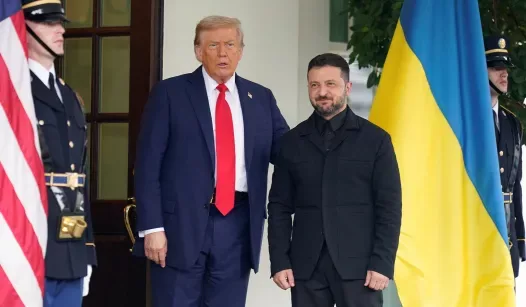
In recent months, former President Donald Trump has re-entered the conversation surrounding the ongoing conflict in Ukraine, advocating for a diplomatic resolution to the crisis. His approach has sparked discussions about the effectiveness of negotiation in a situation that has seen significant military engagement and geopolitical tension.
Trump’s efforts to broker a deal are seen by some as a welcome initiative, especially given the increasing human toll of the conflict. The war, which began in 2014 with Russia’s annexation of Crimea and escalated dramatically in February 2022, has led to widespread devastation and displacement. As the fighting continues, the need for a sustainable solution becomes more pressing.
The core of Trump’s argument revolves around the idea that the best way to end the violence is to shift the mindset of Russian President Vladimir Putin. He believes that convincing Putin that further territorial gains are unattainable could pave the way for negotiations. This perspective highlights a critical aspect of international diplomacy: the importance of addressing the motivations of key players in a conflict.
Critics of Trump’s approach argue that his past dealings with Putin and Russia have been inconsistent and often contradictory. They point to his previous praise for the Russian leader and his reluctance to confront him directly during his presidency. This history raises questions about the sincerity and effectiveness of his current diplomatic overtures.
Supporters, however, contend that Trump’s unconventional style could bring about a breakthrough. They argue that his willingness to engage with adversaries, rather than adopting a purely adversarial stance, could lead to innovative solutions that traditional diplomatic methods have failed to achieve. By proposing a more direct dialogue with Putin, Trump may be opening a door that others have left closed.
The geopolitical landscape surrounding the Ukraine conflict is complex, with multiple nations and organizations involved. The United States, European Union, and NATO have all played significant roles in supporting Ukraine, both militarily and economically. Trump’s proposal for diplomacy must navigate this intricate web of alliances and interests.
Moreover, the impact of public opinion in the United States cannot be overlooked. As the conflict persists, American citizens are increasingly concerned about the implications for national security and economic stability. A diplomatic resolution, if perceived as viable and effective, could resonate with a populace weary of prolonged military involvement.
In conclusion, Trump’s renewed focus on diplomacy regarding the Ukraine conflict presents an opportunity for dialogue in a situation marked by division and strife. While skepticism remains, particularly given his past interactions with Russia, the notion of addressing Putin’s ambitions could be a crucial step toward peace. As the situation evolves, the effectiveness of Trump’s approach will be closely monitored, both domestically and internationally. The hope is that through open communication and strategic negotiation, a resolution may finally be within reach.