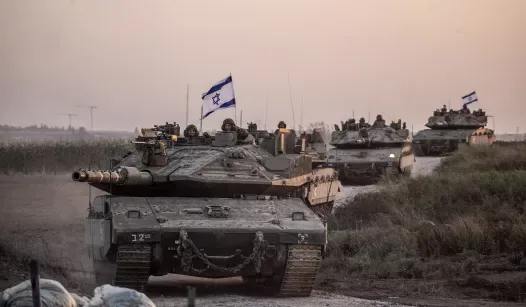
Israel has solidified its position as the military hegemon in the Middle East, significantly altering the dynamics of power in the region. In contrast, Hamas, once a formidable force, now finds itself diminished and struggling to maintain its influence. This shift has profound implications for both regional stability and international relations, particularly for the United States, which has long been involved in Middle Eastern politics.
The transformation of Israel into a dominant military power can be traced back to several factors, including advancements in technology, strategic alliances, and a focus on defense and intelligence capabilities. The Israeli Defense Forces (IDF) have invested heavily in cutting-edge technology, including missile defense systems like Iron Dome, which have proven effective in intercepting threats from Gaza. This technological edge has not only bolstered Israel’s security but has also served as a deterrent against potential aggressors in the region.
On the other hand, Hamas has faced numerous challenges that have led to its current weakened state. The organization has been significantly impacted by internal divisions, loss of funding, and military setbacks. The ongoing blockade of Gaza has exacerbated its struggles, leading to humanitarian crises that have diminished public support. Furthermore, the shifting alliances in the region, including normalization agreements between Israel and several Arab nations, have isolated Hamas and reduced its standing as a key player in Palestinian politics.
The implications of this power shift extend beyond the borders of Israel and Palestine. As Israel consolidates its military dominance, it is likely to pursue more assertive policies in the region. This could lead to increased tensions with neighboring countries, particularly those that have historically supported Hamas or opposed Israeli policies. The United States, as a key ally of Israel, will need to navigate these complexities carefully, balancing its support for Israel with the need to address the humanitarian situation in Gaza and the aspirations of the Palestinian people.
Moreover, the evolving geopolitical landscape presents both challenges and opportunities for U.S. foreign policy. The Biden administration has expressed a commitment to a two-state solution, but achieving this goal will require addressing the underlying issues that have fueled the conflict for decades. The U.S. must engage with a range of stakeholders, including regional partners and international organizations, to foster dialogue and promote stability.
As we look ahead, the situation remains fluid, and the balance of power in the Middle East will continue to evolve. Understanding the current dynamics is crucial for anyone interested in the political landscape of the region. The ongoing developments will undoubtedly shape not only the future of Israel and Palestine but also the broader context of U.S. involvement in Middle Eastern affairs.