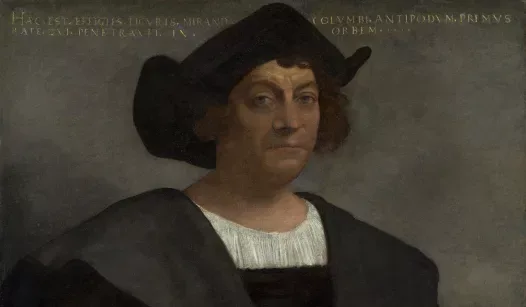
Christopher Columbus has long been a figure shrouded in myth and controversy. For many Italian immigrants, he represented hope and the promise of a new beginning in America. However, the narrative surrounding Columbus has evolved, often overshadowed by fictional accounts and misconceptions, such as those propagated during the French Revolution, which inaccurately depicted him as a proponent of the flat Earth theory.
To understand Columbus in a more nuanced way, we must peel back the layers of history and examine both his accomplishments and the complexities of his legacy. Columbus, an Italian navigator and explorer, is credited with opening the Americas to European colonization. His voyages, which began in 1492, were fueled by the desire for new trade routes and the expansion of European influence. This ambition ultimately led to significant cultural exchanges, but it also resulted in devastating consequences for Indigenous peoples.
The romanticized version of Columbus often overlooks the darker aspects of his expeditions. While he is celebrated for his navigational skill and bravery, it is essential to acknowledge the impact of his arrival on the native populations. The introduction of European diseases, warfare, and slavery decimated Indigenous communities across the Caribbean and beyond. Understanding this duality is crucial for a comprehensive view of Columbus’s legacy.
In recent years, debates surrounding Columbus’s commemoration have intensified. Statues have been erected and subsequently toppled, and Columbus Day has been rebranded in various states as Indigenous Peoples’ Day. These discussions reflect a growing awareness of the need to honor the voices and histories of those who were marginalized in traditional narratives. This shift prompts us to reconsider how we celebrate historical figures and the values they represent.
The call to “bring forward the real Christopher Columbus” is not merely a plea for a return to an idealized past but an invitation to engage with history in a more informed and inclusive manner. It encourages us to recognize the contributions of Italian immigrants who saw Columbus as a symbol of their heritage while also grappling with the historical implications of his voyages.
As we navigate these complex discussions, it’s essential to foster dialogue that respects diverse perspectives. By doing so, we can create a more balanced understanding of history that honors both the achievements and the suffering experienced by different groups. This approach not only enriches our comprehension of the past but also informs our present and future as we strive for a more equitable society.
In conclusion, the legacy of Christopher Columbus is multifaceted, encompassing both the hope he inspired in many and the pain he caused to others. By acknowledging these complexities, we can move toward a more nuanced understanding of our history, one that honors the contributions of all people while recognizing the need for justice and reconciliation.